“Modestly I have struggled for the rights of my folk, and I myself have accepted many personal insults but when the insult becomes an insult to my people as a whole then there’s danger…“
Imagine if an international superstar played at Eastbourne’s Winter Gardens today. Imagine the excitement and crowds if someone like Drake played there – imagine the disappointed hundreds who would try but fail to get tickets. Now imagine an international star deemed so controversial that he was banned from performing in his home country and who was hounded by the CIA and FBI. An artist whose performances had led to protest and riot. Between 1929 and 1939 Eastbourne winter Gardens hosted an internationally renowned artist considered by US authorities to be at least as controversial and outspoken as Bob Vylan or Kneecap are in the UK today.
Eastbourne Winter Gardens
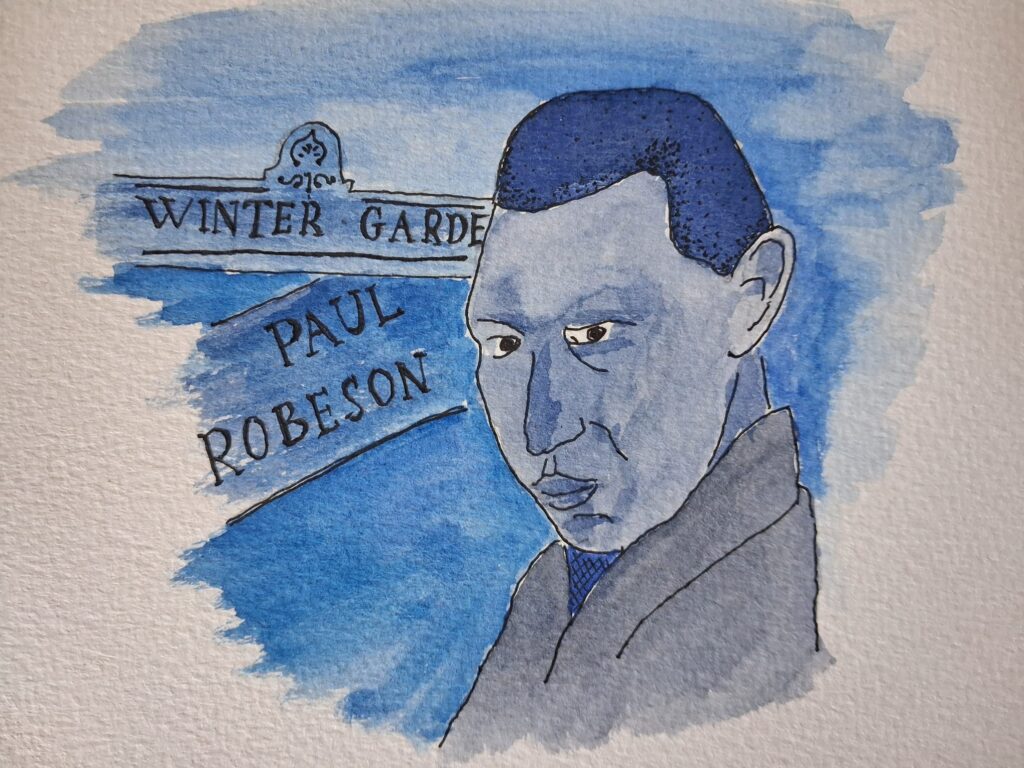
Paul Leroy Robeson appeared at the Winter Gardens in Eastbourne 9 times or more to sell-out crowds: all seats taken, all floor space taken by those standing (in what would breach fire regulations today) and hundreds more still queueing outside after the concert had started with no realistic prospect of admission.
Spirituals and stardom
Paul Robeson’s international renown was well deserved. He was foremost amongst “spiritual“ singers known for his extraordinary bass-baritone voice and was an international film star. He was probably best known for the song Ol’ Man River written for the musical Show Boat and performed by Robeson both on Broadway and in the 1936 film adaptation. He became the most famous black man in the World. The controversy surrounding Paul Robeson arose from the fact that he was black in a racist society and compounded by his uncompromising support for Civil Rights in the USA and globally.
Jim Crow laws
Paul Robeson was born in the USA in 1898, the son of a former slave. The USA was an even more deeply racist society then than now. In the South the “Jim Crow laws“ enforced segregation and effectively prevented black people from voting until into the 1960s. Lynchings (hanging, shooting and burning alive) of black men and women who had been deemed to transgress in some way were common. In the North there was systematic discrimination in jobs, pay and housing although this was not enshrined in law. As a result many black families, like Robeson’s, moved north if they could.
Triumph over hardship
Despite adversity Robeson excelled in everything he did due to his sheer determination and self belief. Robeson graduated from Columbia Law School in 1923. He played professional football in order to pay for his tuition. Both of these spheres were almost impossible for a black man to succeed in due to extreme racist hostility. He was attacked and injured in an attempt to deter him from playing football but he pushed on; he would fight back if he had to and could give better than he got. He secured employment at a prestigious law firm but his assigned secretary refused to take dictation from a black man. He left law to concentrate instead on singing and acting. He learnt to speak and perform in a dozen or more languages.
Discrimination
Black actors were consigned to playing racial stereotypes – often comical characters. He sought out complex characters with dignity and gravitas. In The Emperor Jones in 1933, a role steeped in racial stereotype, Robeson showcased his incredible acting versatility carrying a dignity through the film that transcended the highly problematic storyline. A terrible film carried by a great actor.
Show Boat
In 1928 Robeson moved with his family to the UK where black actors could potentially land better roles. However, when Show Boat opened in London he found himself propelled to international fame playing a Southern “house boy“ on stage and then film, singing what became his signature song containing racially derogatory lyrics. In subsequent years Robeson completely revised the lyrics turning the song into one of defiance and resistance removing the racial slurs and replacing “tired of livin’ and scared of dying“ to “I must keep fighting until I’m dying“.
Welsh miners
In the late 1920s Robeson met unemployed and striking Welsh miners from the Welsh valleys. He helped raise money for food, and clothing and credited the Welsh miners for political education. He saw parallels and linkages between working class struggle and the struggle for civil rights. In 1940 Robeson starred in Proud Valley a British film where he plays a black American who joins a Welsh mining community, and sings his way into the hearts of his fellow miners. He retained a long term relationship with the Welsh miners and the British trade union movement.
Othello
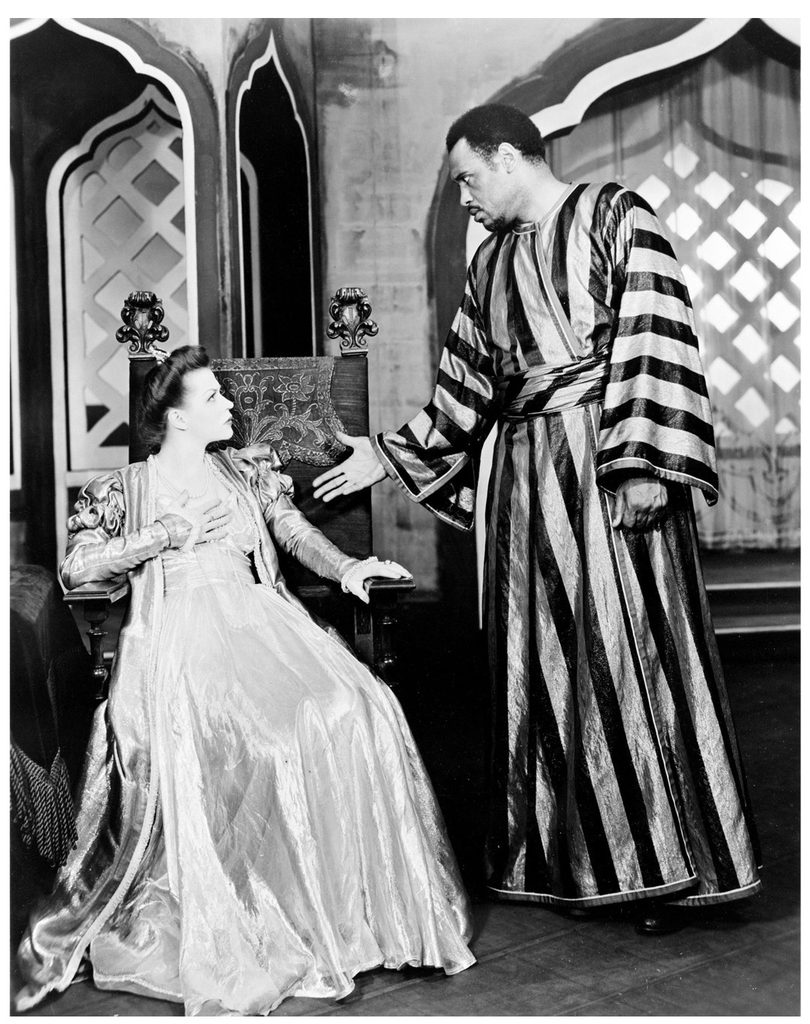
In 1943 he was the first black man to play Othello in a production on Broadway which ran for an extraordinary 296 performances. This is a role he had previously played as a student, then in London’s West End, and a role he would play again in Stratford-Upon-Avon in 1959. He interpreted the play as being about pride and dignity and not simply sexual jealousy. Racists objected each and every time to a black actor playing alongside a white woman but each time Robeson prevailed. (Yes, racists objected to a black man playing a black character!).
Working class champion
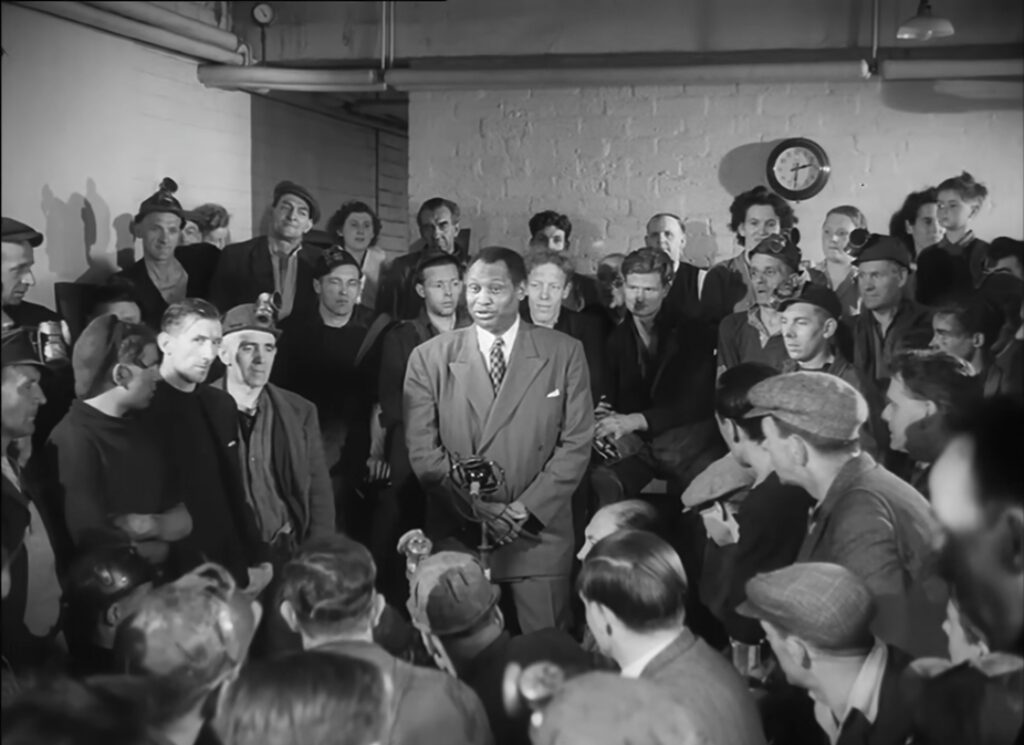
When he toured he often made the effort to sing to groups of workers outside of traditional venues. At such events he would sing songs championing the struggles of the working class such as commemorating the life of radical American socialist, Joe Hill. He played in Spain supporting the republican cause against fascism in the civil war.
In 1949 Robeson was due to play at a benefit for the civil rights congress in Peekskill, New York. Far right activists organised to attack concert goers with baseball bats and threw rocks seriously injuring more than a dozen people and forcing the cancellation of the concert.
The Trade Union movement responded to ensure the concert could be reconvened. On September 4th 1949 twenty thousand people turned up to the reconvened concert protected by trade unionists and members of the Communist Party, including Pete Seeger and Woody Guthrie.
The concert was held succesfully but far right protesters and police fought running battles, with many concert goers leaving the venue.
‘America is a lie if black people aren’t free’ – Paul Robeson.
Robeson first visited the Soviet Union in 1934 reporting that for the first time he felt he had been treated as a human being and not defined by race. Robeson advocated socialism, anti-colonialism and peace with the Soviet Union.
Robeson never denounced Stalinism or repression in Soviet Russia as he felt to do so would be to betray friends and comrades in the USA who had taken inspiration from communism. However, during Stalin’s antisemitic purges he defiantly sang a Warsaw Ghetto resistance anthem in Yiddish at a concert broadcast live on Soviet radio (the Warsaw ghetto uprising was the largest revolt by Jews against the Nazis during WW2). He first read the lyrics out in Russian and dedicated the song to his Jewish poet friend, Itzik Feffer, imprisoned by Stalin’s regime. He continued to be invited to and to perform in Russia and to advocate for Soviet Russia. In 1958 he performed at Moscow’s Sports Palace to an estimated crowd of one hundred thousand. However, for his sympathy to Soviet Communism he was made to pay a heavy price back home in “the land of the free“.
Land of the Free
In 1950 the US authorities withdrew his passport extinguishing his international career. He was branded ’the most dangerous man in America’ following a speech he made at an international conference, after the US press misreported his words, manufacturing an outcry. However, he found a partial way around the travel ban when in 1957 he sang to the people of Wales for the first time since 1949 – by telephone. Thousands of people packed the theatre at Porthcawl just to hear Robeson sing down the telephone wire. The sound quality must have been dreadful.
As soon as he got his passport back in 1958 he returned to Wales to sing at a huge miners’ gala but he remained an outcast in the USA.
Legacy and inspiration
Robeson’s struggles and achievements prepared the ground for black American artists who came after him, from Harry Belefonte and Sydney Poitier to James Brown and Denzel Washington. Malcolm X took direct inspiration from Robeson’s anti-colonialism and anti-racism. In 2001 the Welsh rock band Manic Street Preachers released a single, ‘Let Robeson Sing’ in tribute to the great man.
Several biographies exist including one by his son, Paul Robeson Jr, and there is even a graphic novel – ‘Ballad of an American‘. Bookmarks Socialist publishers are shortly to bring out an introduction to Paul Robeson as a radical activist in their Rebels Guide series. Russ Chandler’s book ‘Hold the Line: Echoes of the Peekskill Riots‘ is also due to be republished.
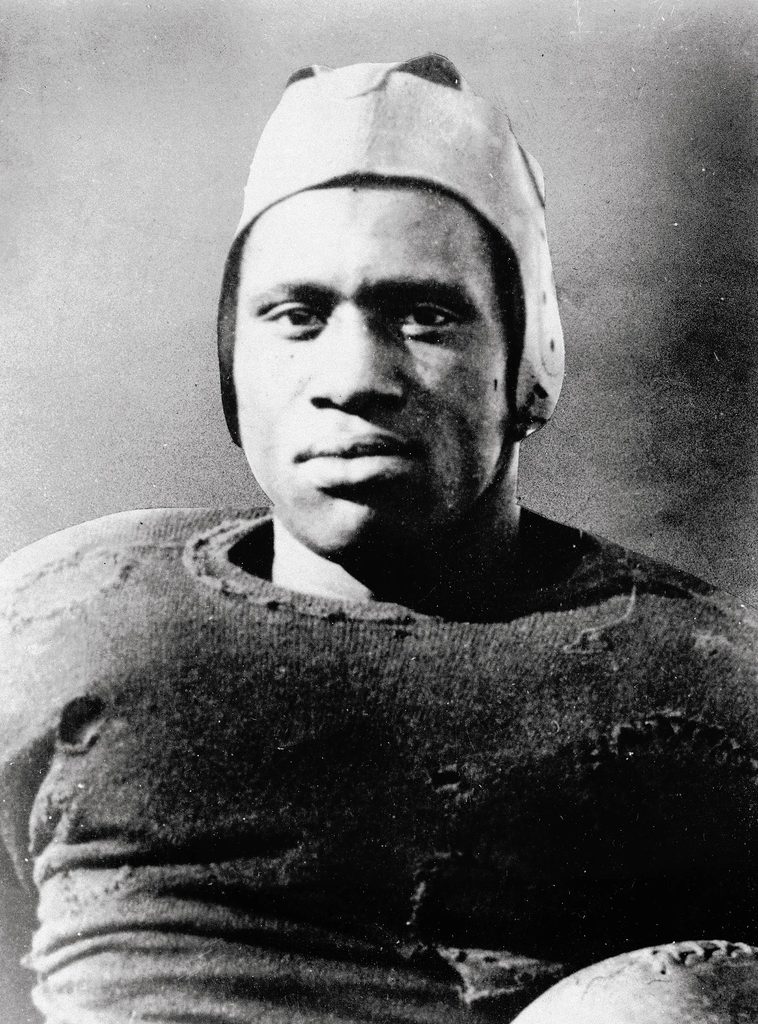
We can’t all be as multi-talented as Paul Robeson. We can’t all be professional American footballers, qualified lawyers, speak multiple languages, be among the best singers in history and an international film star. We can however all take inspiration from the brave stand that Robeson took against oppression.
Maybe Paul Robeson’s example can inspire us all to be that little bit braver in the face of bigotry, inequality and the threat of the far right today.
“I must keep fighting until I’m dying“.