
Thank you to Mike Anderson for these recollections:
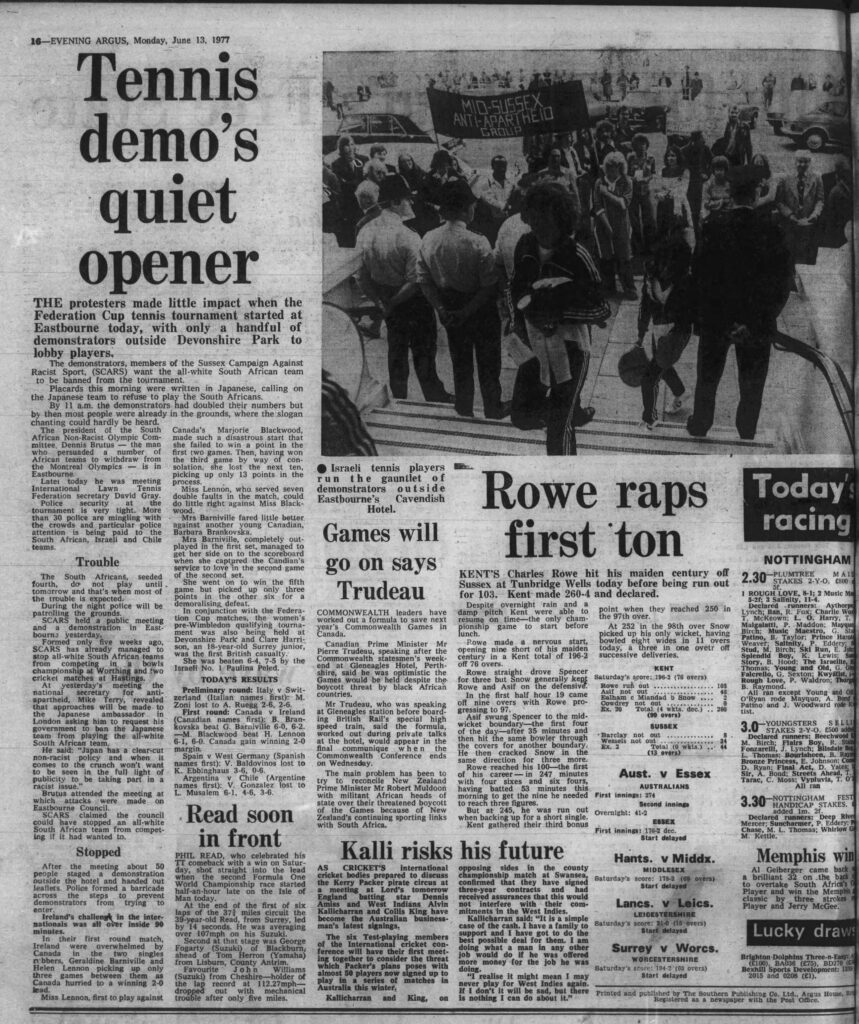
Devonshire Park hosted the Federation Cup women’s tennis tournament from 13th-18th June. The Tournament included a team from South Africa, then governed by the white minority Apartheid Regime. The Tournament came a year after the Soweto uprising which was brutally suppressed by the Regime. It was boycotted by the USSR, Hungary and Czechoslovakia in protest at the participation of the South African team.
Although it’s nearly 50 years ago, Barbara and I can remember being on the picket outside the Cavendish Hotel and jeering the Israeli team as they went in. A pompous ex-military type passing by, called me “a Communist agitator”. I replied there would be trouble for people like him when Cuban tanks rolled into Pretoria to liberate South Africa, a reference to the support given by Cuba to the MPLA in Angola’s liberation struggle.
In 1977 we have never thought that Nelson Mandella would be released in 1990 and would become South Africa’s first Black President in May 1994. I hope the cultural and sporting boycott of Apartheid South Africa played a small part in the downfall of the regime.
Editors note: Notice in this Argus newspiece the header paragraph comments “The protesters made little impact when The Federation Cup Tennis Tournament started at Eastbourne today”. Well, we proved them wrong about that, for sure. The solidarity of the Anti-Apartheid movement triumphantly had its day on 11th February 1990 with the release of Nelson Mandella. And remember how the British establishment condemned him for too long until finally the protesting grassroots public pressure was brought to bear upon them.
On family
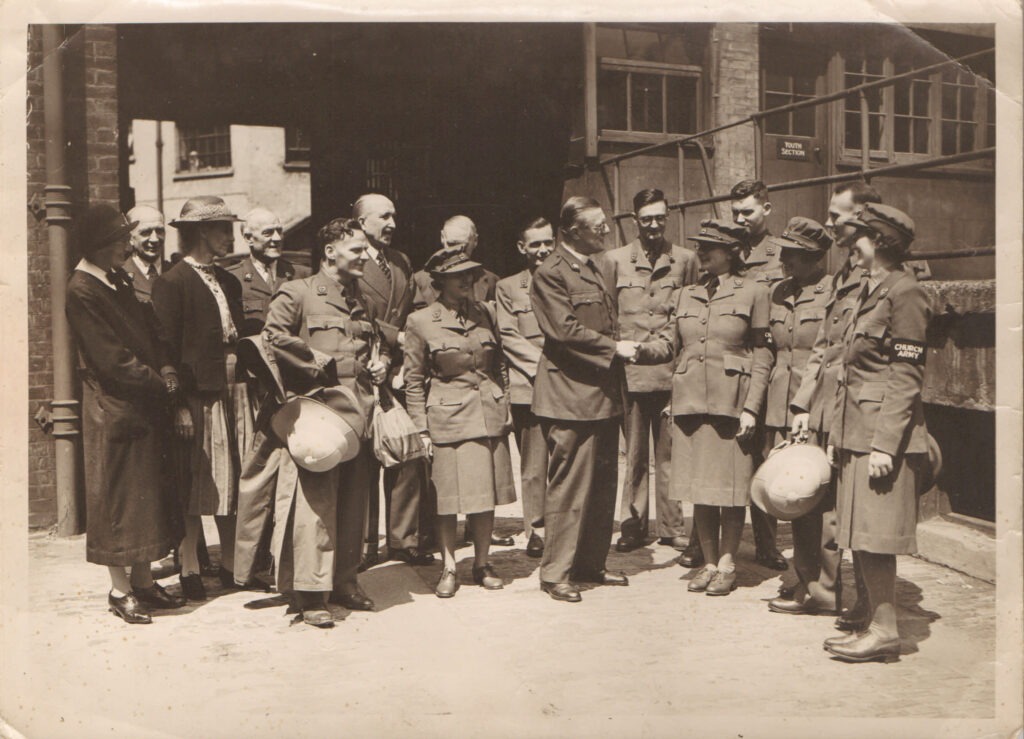
Although my Mum wasn’t political, she’d always brought up my brother and I to believe that race discrimination was wrong. Before she married my dad, she’d been a sister in the Church Army and had been posted to Egypt during the Second World War. The troop ship carrying her to Egypt called at Cape Town, and Mum was for a short time posted to work in a mission serving a Black township. Mum was appalled by the poverty and hardship she witnessed and at the way in which Black people were treated by White South Africans, and how Allied troops treated Egyptians when she finally arrived in Cairo.
One of my Mum’s favourite books was Cry The Beloved Country by Alan Paton, which was made into a film starring Sidnet Poitier.
On becoming politicised.
It was my involvement in the Anti-Apartheid movement that started my interest in politics. I remember the 1969-70 Stop Tour Campaign against the South African Rugby Union team’s visit to Britain. I put a big poster on my car boot which had a picture of black demonstrators being attacked by South African police with the caption: “If you could see their national sport, you might be less keen to see their rugby.
I recall going to a meeting in a Methodist Church in East Grinstead with Barbara, my Mum and Patrick, my brother, in the late 1960s which was showing a film about the Sharpeville Massacre.
The first General Election I was entitled to vote in was 18th June 1970, as the voting age was 21 then. The sitting MP for the area was Geoffrey Johnson-Smith, a former TV presenter who held a street meeting in Ashurst Wood where we lived, and I went along. The gathering of 30-40 people seemed to be mainly Conservatives and after his address he invited questions, so I put my hand up and asked what the Conservatives would do to end Apartheid in South Africa.
The assembled Tory faithful tutted and rolled their eyes as I must have seemed a horrid long haired lefty agitator. Smith started his response by saying how brave I was by asking such a question, and then on to say that the best way to end Apartheid was to work with and try and influence the Apartheid regime. I thought you smarmy condescending git, realising that the Tories were not going to do anything.
I decided to vote Labour and that began my interest and involvement in left wing politics and trade unionism.
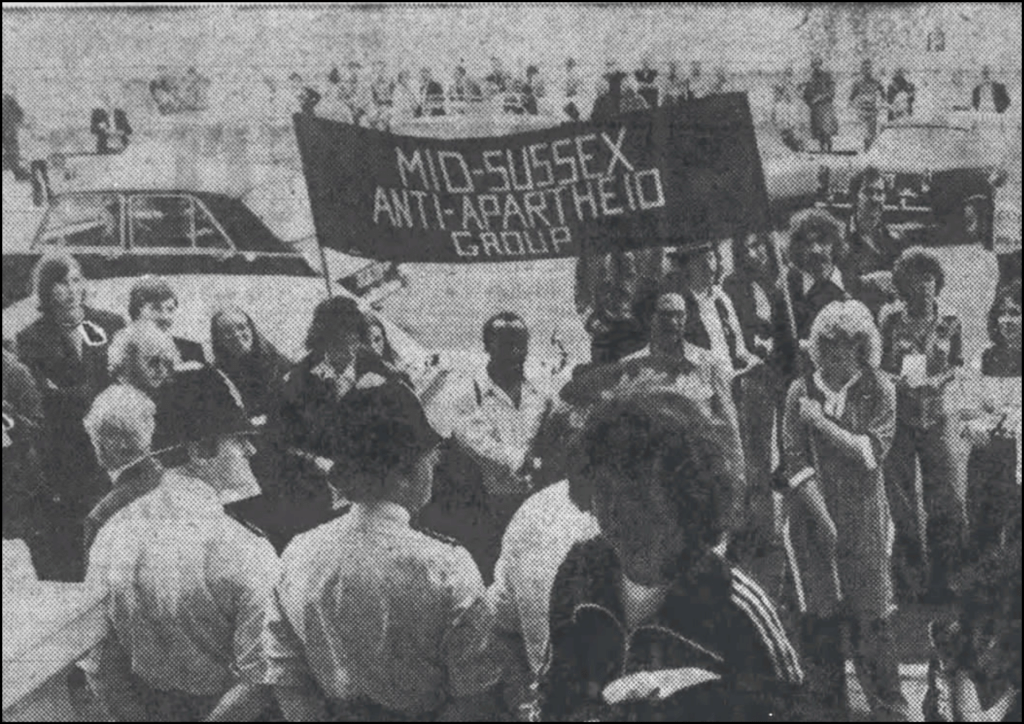
Notes on this photo: “Barbara and I are standing behind the woman holding the Mid Sussex Group banner. The man next to me is Keith Duke who taught music in an Eastbourne school and was a regular at the Crown Folk Club in the Old Town. The woman next to Barbara was Jean Leeves from Broad Oak, who sadly died in July 2023”.
Guest Writer Mike Anderson