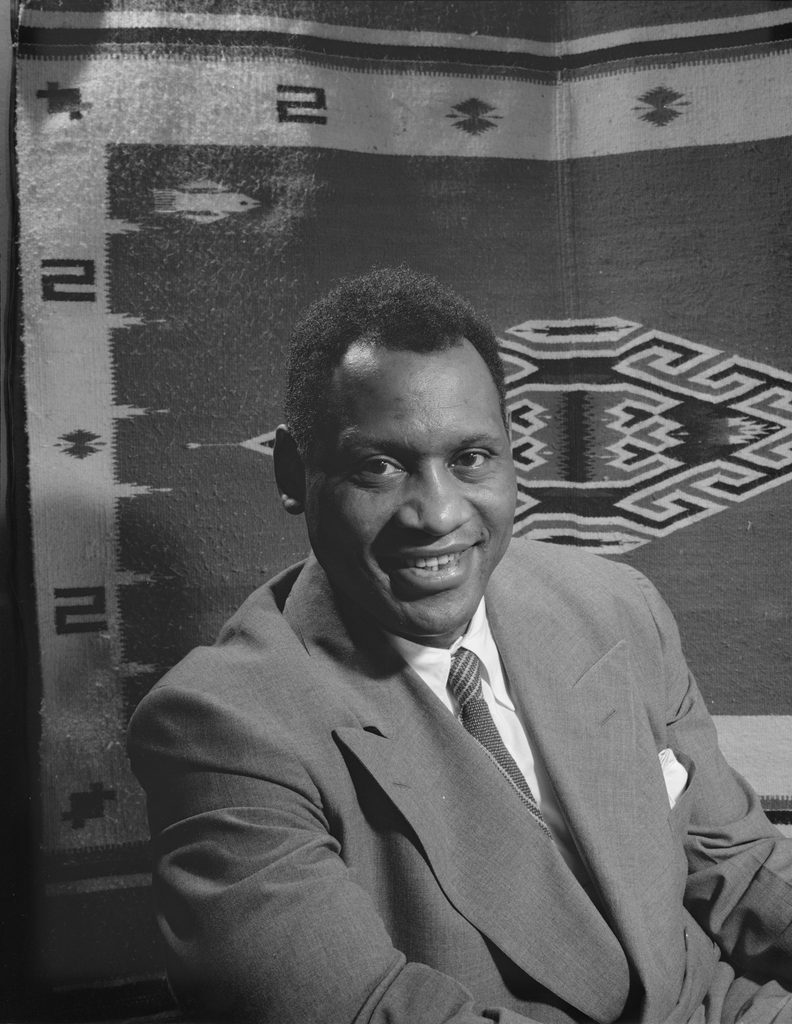
Title: Washington, D.C. Paul Robeson, Baritone, 1942, June. Photographer: Gordon Parks, 1912-2006.Photo on paper Washington DC Office of War Information.This image is available from the United States Library of Congress’s Prints and Photographs division under the digital ID fsa.8b14812.No known restrictions. General Public domain.
Paul Robeson was born and raised during a period of segregation, lynching, and open racism. He earned a four-year scholarship to Rutgers University, making him the third African American to attend the school.
Robeson’s many accomplishments include:- an American Football hero (fashioned from his years at Rutgers); an Ivy League trained lawyer (1923 graduate of Columbia Law School); an acclaimed film and stage actor; bass-baritone concert performer; scholar (e.g. he studied global folk cultures and traditions); writer; international civil rights and political activist: expert in over a dozen languages (fluent or conversant in roughly 12 to 20 languages. He also famously performed and sang folk songs in over 50) ; a Spingarn Medal winner (awarded annually by the NAACP – an American civil rights organisation formed in 1909 for an outstanding achievement by an African American); and a winner of the International Stalin Peace Prize award by the Soviet Union “for strengthening peace amongst peoples”. This award was announced in December 1952, but Robeson could not travel to collect it immediately because the U.S. State Department had withheld his passport
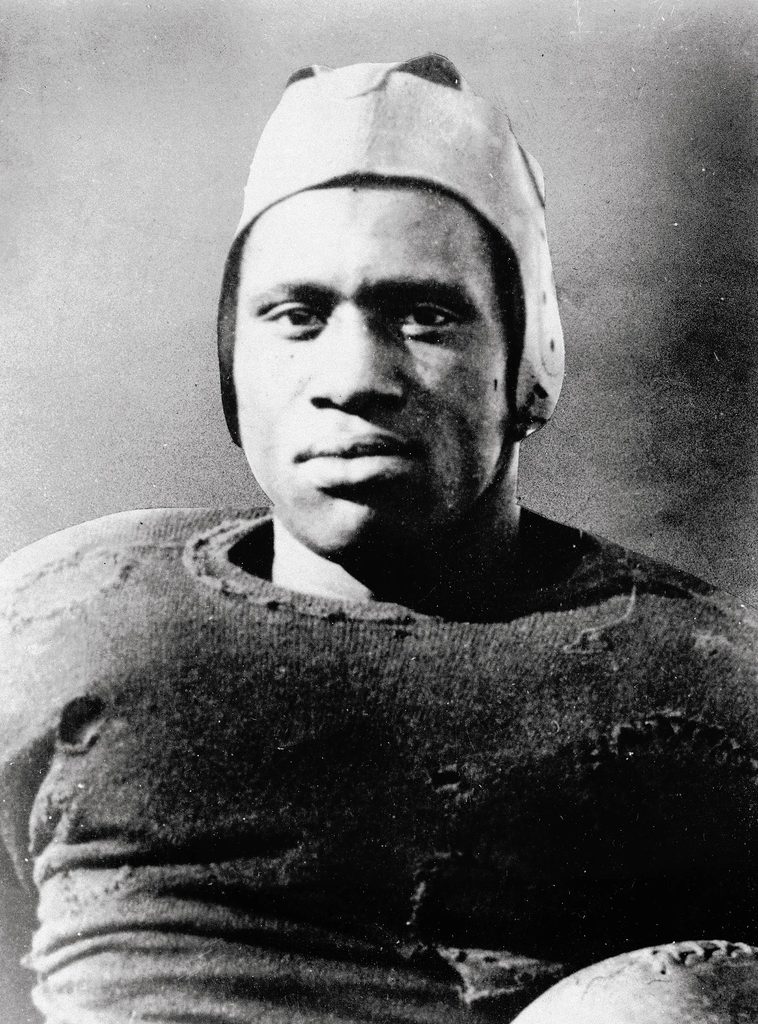
Title: All-American Rutgers end Paul RobesonPhotographer: Unknown circa 1919 Credit: College Football Hall of Fame Copyright: Wiki Commons
Rutgers
In 1915, Robeson became the third African-American student ever enrolled at Rutgers, and the only one at the time. At Rutgers, Robeson was a two-time All-America end. Frank Menke named him All- America in 1917 and 1918. Yet, in 1916, Paul Robeson was excluded from the Rutgers football team against Washington and Lee University because he was Black and despite being one of their best players (his coach at that time did not support him). Regretting the decision, Coach G. Foster Sanford, a staunch defender of Robeson, stood by Robeson and ensured he got to play the following years.
In his history of Rutgers football, Michael Pellowski wrote:
“It was in the last game of the 1917 season that Paul Robeson dazzled sportswriters and American football fans coast to coast. . . . Rutgers’ Paul Robeson ruled the gridiron that day. He singlehandedly terrorized the opposing offense, making crushing tackle after tackle. On offense he caught a pass at the 5-yard line and dragged three would-be tacklers into the end zone to score a touchdown.”
Robeson was later inducted into the College Football Hall of Fame.
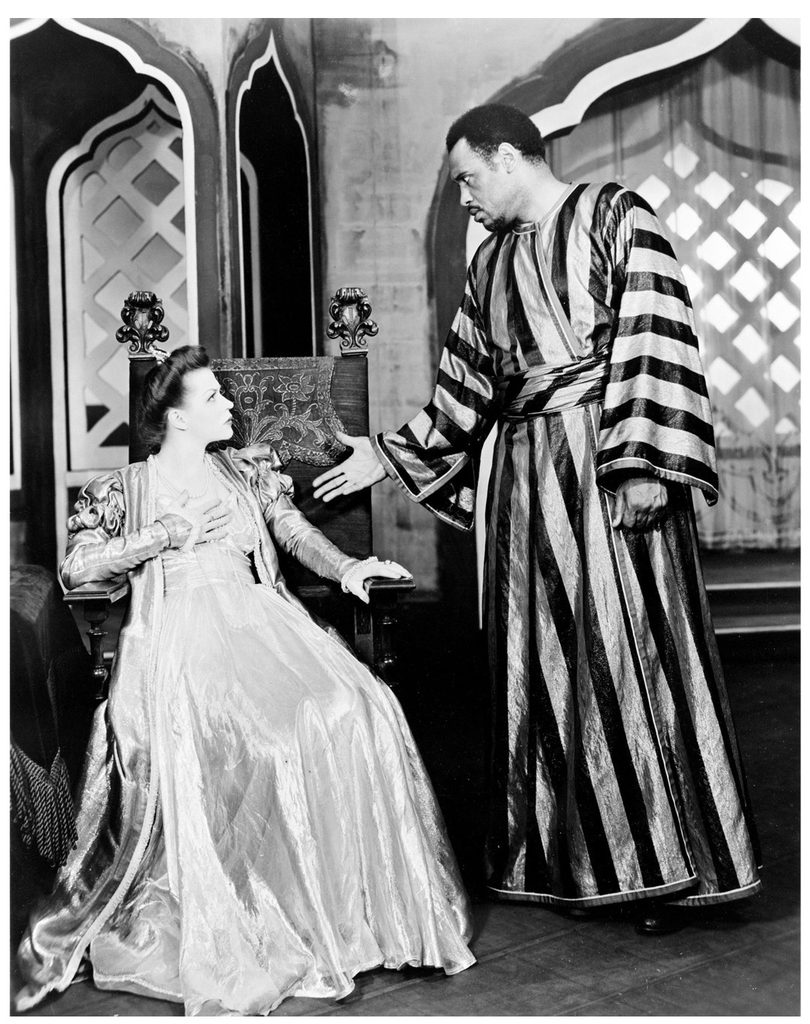
Title: Robeson Hagen Othello 1943-44 Photographer: Unknown Scene from Othello with Paul Robson as Othello and Uta Hagen as Desdemona. Theatre Guild Production, Broadway, 1943-44 US Library of Congress. Prints & Photographs division digital ID fsa.8e02578. No known restrictions. General Public domain.
Othello. Paul Robeson defined his legacy on the stage through his monumental, history-making portrayals of Shakespeare’s Othello. In London (1930). He starred opposite Peggy Ashcroft, at the Savoy Theatre, in a mixed-race casting that would have been unthinkable at that time in the United States. Only a year earlier Robeson had been subject to the infamous ‘colour bar’ operated by the Savoy Hotel in London.
Although both were married, Robeson and Ashcroft’s offstage relationship “blossomed”, Peggy Ashcroft explaining that “what happened between Paul and myself… was possibly inevitable’. In a biography of Robeson’s, Ashcroft was quoted as saying, ‘how could one not fall in love in such a situation with such a man?”
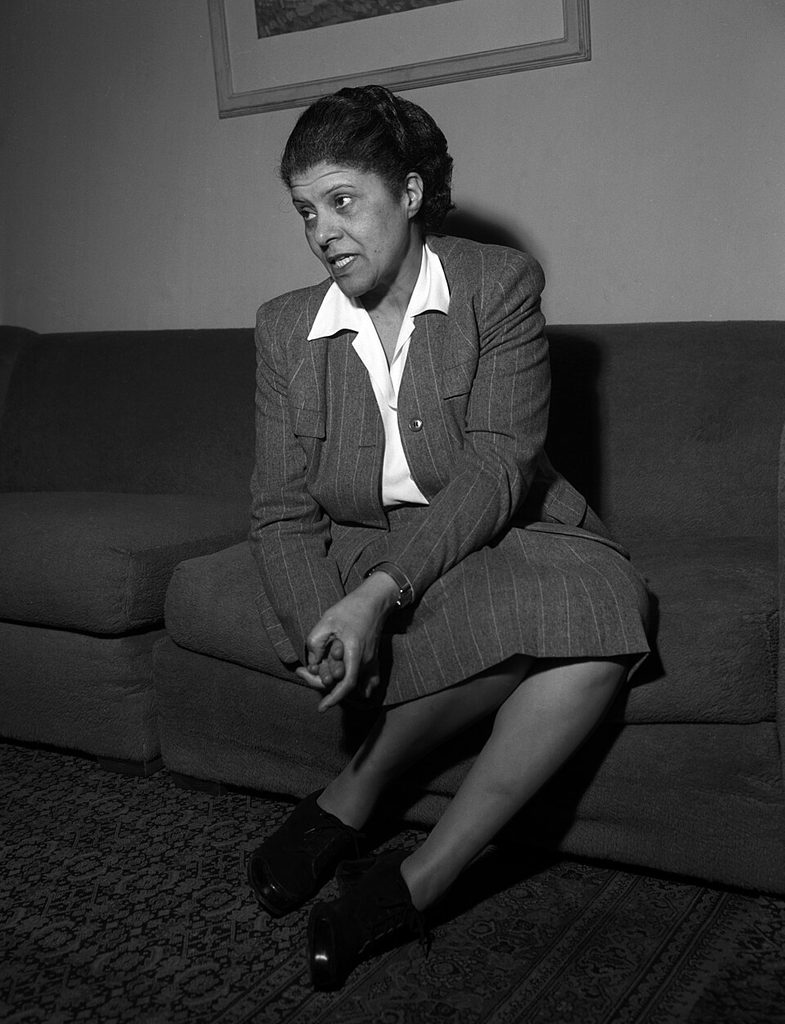
Title: Eslanda Goode Robeson(Dec 1895 to Dec 1965). Photographer: unknown circa 1947 Credit: Los Angeles Daily News Copyright: Creative Commons Attribution 4.0
“Not Just A Wife”
“Eslanda “Essie” Goode Robeson’s life is consistently confined to her role as {Paul Robeson’s} wife, but she was so much more. Her talents and intelligence were boundless; she was an activist, a writer, an {PHD} anthropologist, {a journalist, a UN correspondent}, photographer, an actress and a traveller. She broke barriers and excelled in the various jobs she held and was fearless in pursuing equality”. Karla Mendez, Lead Columnist, Black Feminist Histories and Movement.
Eslanda graduated from Columbia University in New York with a degree in chemistry in 1923. It was during her time at Columbia that she became an activist and met Paul Robeson who was studying law. She worked at New York-Presbyterian Hospital, becoming the first black person to head its surgical pathology department. It was when Robeson was hospitalised at this hospital, after a football injury, that their relationship developed. They married a year later in August 1921. She continued working at the hospital while managing his singing and acting career but eventually quit the job to manage him full time.
In 1930, she wrote a book about Robeson’s life titled “Paul Robeson: Negro.”
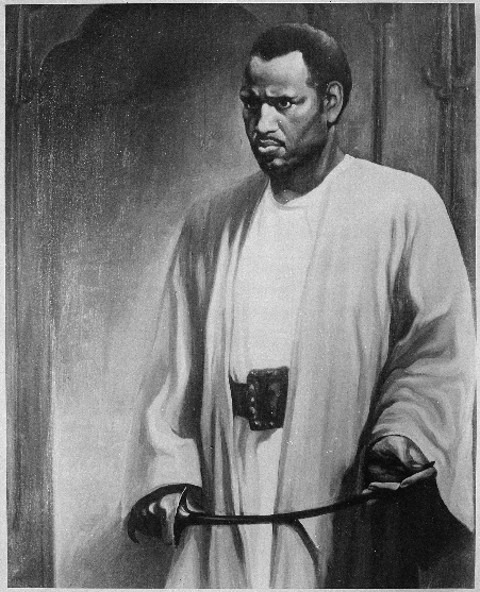
Title: Paul Robeson. Artist: Reyneau, Betsy Graves Reyneau, 1888-1964Painting National Archives Catalogue. Harmon Foundation Collection, 1922–1967. Identifier (NAID) This media is available in the holdings of the National Archives and Records Administration, catalogued under the National Archives Identifier (NAID) 559205.
Paul Robeson – Actor
Robeson was the first black actor to play Othello on a London stage since Ira F Aldridge, also an American: in 1825. Later, on Broadway (1943), the landmark production of Othello ran for a record-breaking 280 performances.
Robeson appeared in 11 movies in the 1920’s and 19 in the 1930’s. However, encouraged by his wife, Eslanda, he switched to focussing on his bass baritone performances due to the limitations for black actors – the small number of mostly black stereotype roles.
The film that Robeson says he was most proud of was the 1940 Ealing Studios Proud Valley.
Filmed in a South Wales coalfield, the principal Welsh coal mining area, the film is about an African American seaman who joins a mining community. It includes their passion for singing as well as the dangers and precariousness of working in a mine.
The film was even more important due to the enduring, real-life friendships that existed between Robeson and the Welsh Miners. He first overheard them singing outside the London theatre where he was performing. The miners had walked from Wales on a hunger march. Robeson then supported them during those poverty-stricken days, with the miners later supporting Robeson during the days when he was hounded by the US state government as part of McCarthyism.
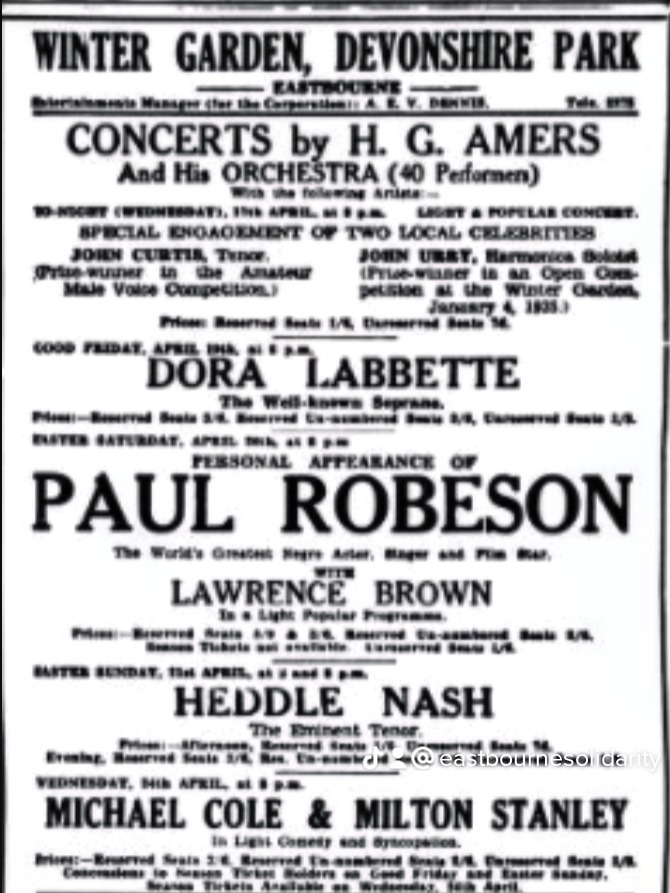
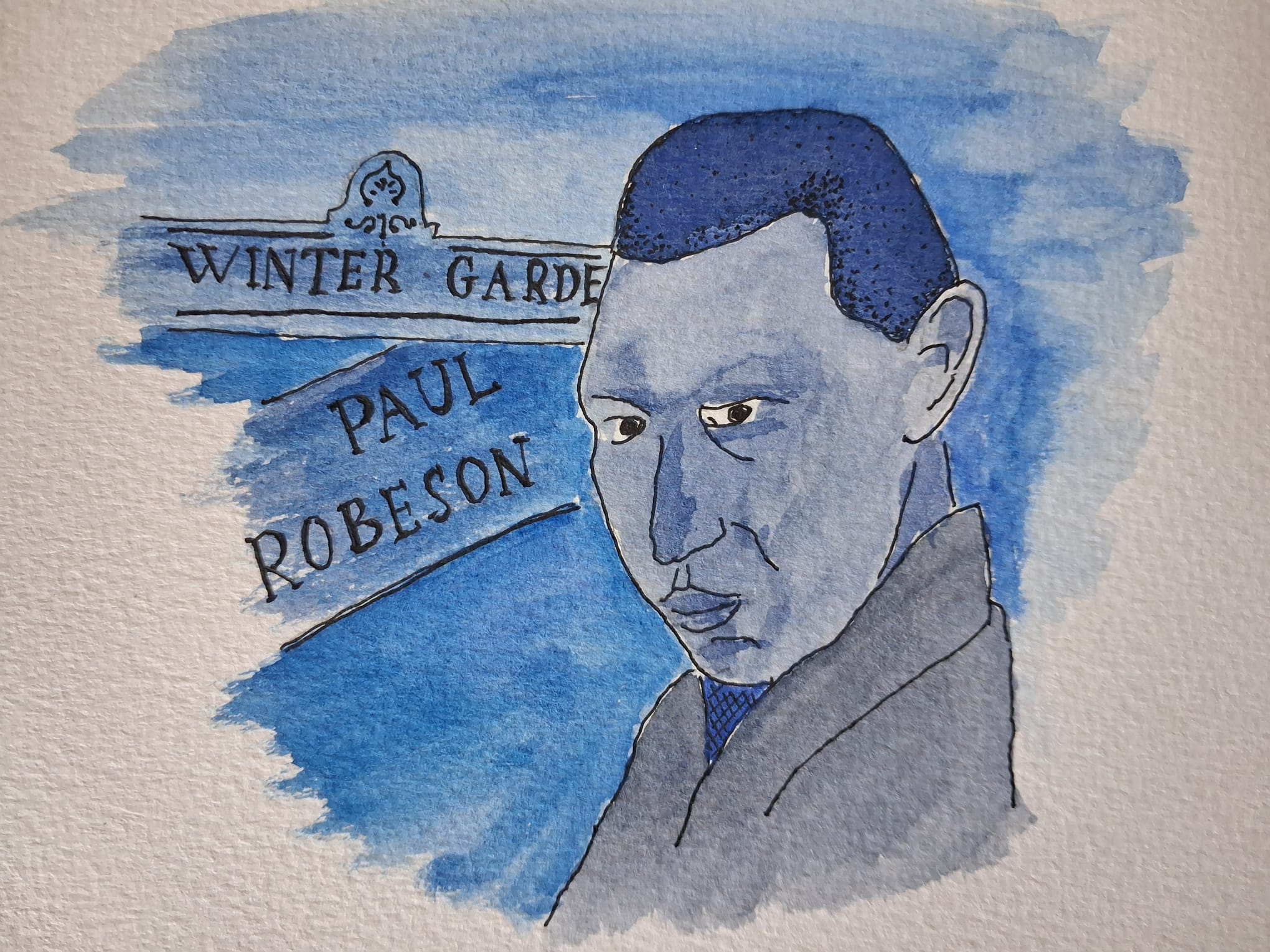
Title: Winter Garden, Devonshire Park Advertisement. Eastbourne Gazette, 17 April 1935. Copyright With permission. All Rights Reserved.
Robeson, Bass Baritone Singer
Paul Robeson performed regularly in the Floral Room at the Winter Garden from the late 1920s until 1939. With standing room audiences of 2000 and queues of disappointed fans left outside and with rave reviews in the local papers.
1. The Eastbourne Gazette reported on their front page on 15 August 1934 there was ‘Paul Robeson Enthusiasm at the Winter Garden’:
“Extraordinary and almost overpowering was the enthusiasm that greeted Paul Robeson’s singing at the Winter Garden, Devonshire Park, Sunday evening, by an audience that all but overflowed into the gangways”.
2. As ‘EHB’ noted, again in the Eastbourne Gazette, on Wednesday 24 April 1935,
“The huge audience that gathered in the Winter Garden hear Mr Paul Robeson on Saturday evening offered another striking example star worship. Not only was every seat, but every inch of standing-room in the hall was occupied by this vast concourse”.
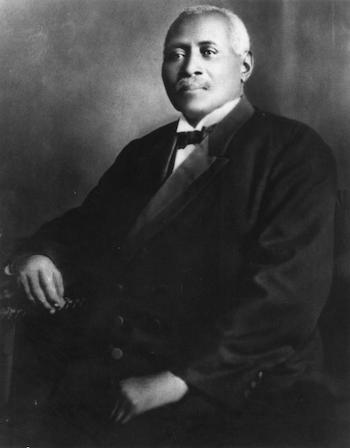
Paul Robeson’s father, Rev. William Drew Robeson (1844–1918). Circa 1880–1901 Credit: Most likely Witherspoon St. Presbyterian Church, Princeton, NJ, via “William Drew Robeson (1844–1918),” Copyright: Wikipedia. Public Domain.
Rev. William Drew Robeson
Paul Robeson’s father was of Lgbo origin and was born into slavery. At aged 15 in 1860, during the Civil War, he escaped from a plantation in North Carolina, to the northern part of the State.
He worked as a labourer for the Union Army, which also provided schooling for runaway slaves. Later, attending Lincoln University outside Philadelphia, he earned a bachelor’s degree and two master’s degrees, in divinity and theology. He learnt the classics, which he later passed on to his son.
He served as pastor at the Church of the Covenant from 1878 to 1880. From 1880 to 1901, William was the minister of Witherspoon Street Presbyterian Church in Princeton, a church that had been specifically constructed for the Black membership of First Presbyterian Church of the city.
After 20 years of service William was ousted having become affiliated with a more vocal and activist element of his congregation, voicing his opposition to social and political injustice. Robeson has written about the values his father instilled in him:-“I know he would say, ‘Stand firm, son; stand by your beliefs, your principles.’”
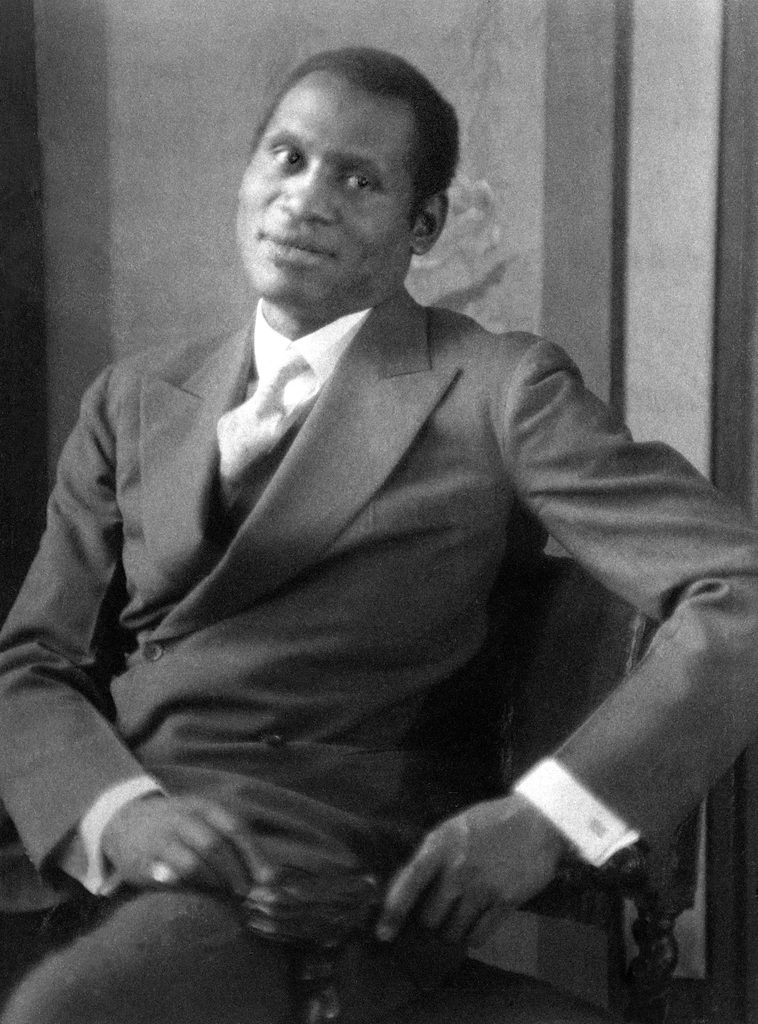
Title: Paul Robeson.
Credit: Doris Ulmann, c 1924. Platinum print.
Copyright: Wiki Commons. From the National Portrait Gallery. NPG-NPG 78 2Robeson-000001 (adjusted)
The Harlem Renaissance
In 1924, Paul Robeson launched his breakthrough acting career, starring in two major theatrical productions by Eugene O’Neill: All God’s Chillun Got Wings and a revival of The Emperor Jonese.
Perhaps the most famous African American actor of the early 20th century these performances cemented his status as a major artistic figure during the Harlem Renaissance. The Harlem Renaissance was the Black creative revolution in 1920s New York that “transformed the world, both then and now” – Southbank 2025 “A 100-Year Revolution: The Harlem Renaissance”.
Drawn to the historical roots of contemporary Black culture, Robeson adapted his splendid bass baritone voice to interpret Negro spirituals. On 18 May 1929, Paul Robeson performed ‘a special programme of Negro spirituals‘ at the Floral Hall, Winter Garden, Devonshire Park in Eastbourne (see Eastbourne Gazette, 1 May 1929):-
“The famous bass sings fine selections of negro spirituals, and is accompanied Mr. Lawrence Brown, who has composed the music to a good many of them. Paul Robeson’s tour so far has been a triumphant success, all the towns which has yet visited having sold every ticket for his concert. The necessity for early booking of seats is the fact that hundreds of people were turned away from the Brighton Hippodrome when Robeson gave his recital there”.
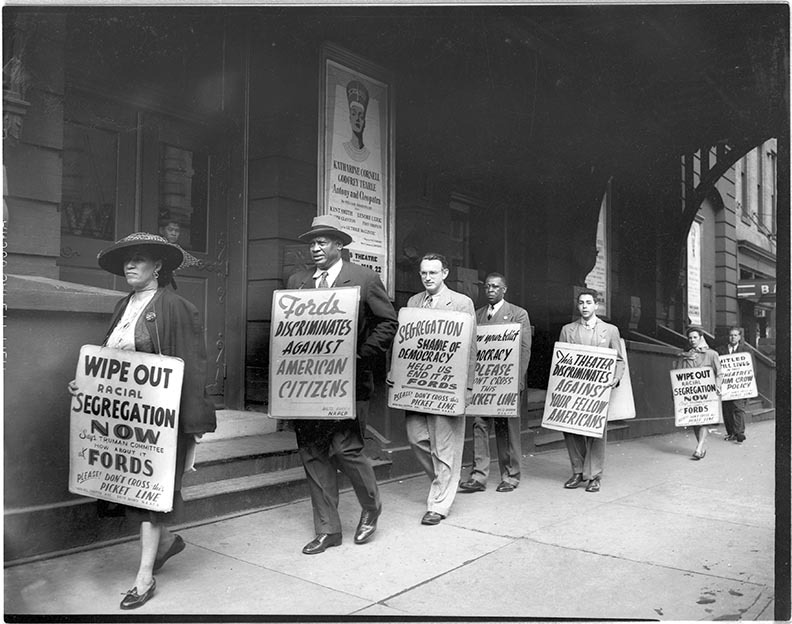
Title: Protesting Jim Crow admission policy at Ford’s Theatre, Baltimore, Maryland. Circa 1948.
Credit: Paul Henderson’s collection capturing Baltimore’s Civil Rights movement (1935 to 1965). Copyright; The collection is preserved by the Maryland Historical Society (now the Maryland Centre for History and Culture). Hen.00.A2-156.
Civil Rights Activist
Ford’s allowed African American actors on stage, but patrons were restricted to an area with poor sight lines known as “the pit.” Black patrons purchased their tickets from the main window and were directed to the alley staircase of the three-story building to reach their seats in the last few rows of the second balcony. The Lyric Theatre (Birmingham, Alabama), in comparison, maintained the opposite policy whereby African Americans were prohibited from the stage, but allowed general seating.In 1947 Baltimore’s Black community declared that the policies at Ford’s Theatre were no longer to be tolerated.
The National Association for the Advancement of Coloured People (NAACP) led a successful protest that would last five years in a city that was much more accustomed to labour-related pickets.
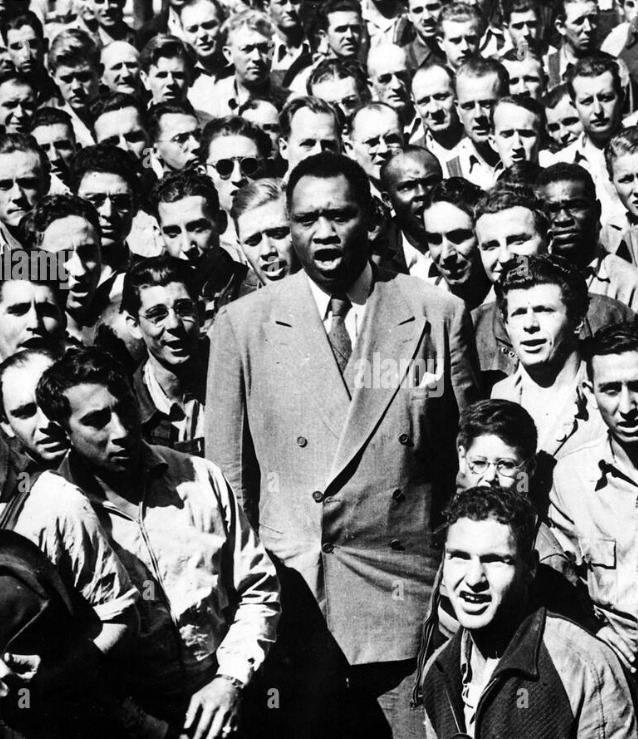
Title: “Paul Robeson…. Leading Moore Shipyard worker in singing the Star-Spangled Banner (Oakland, California. Sept 1942)
Credit: Photographer unidentified Copyright: Public Domain. National Archives collection. NARA – 535874
Defender of Workers Rights. This photograph shows Robeson at a workers’ lunch-hour rally during World War 11 where he stated:-
“This is a serious job – winning this war against fascists. We have to be together”.
Robeson had briefly worked in a shipyard as a young man around the time he attended Rutgers College and Columbia Law School.
Robeson’s political activities began with his involvement with unemployed miners and workers in Britain. He was a staunch, lifelong champion of the international working-class movement, aligning his art, celebrity, and political activism with labour unions, striking miners, and anti-colonial freedom struggles across the globe.
He sang to International Brigaders during the Spanish Civil War, visiting shifting battlefronts, base hospitals, and troop concentrations in Spain (including Tarazona de la Mancha and near Valencia).
Robeson later referred to this time as a major turning point in his life that cemented his lifelong political activism and internationalist stance.