Revisiting the General Strike of 1926 – when workers were ready to dare. Charlie Kimber and Judy Cox.
It was great to have been invited to a Book Launch (4th June 2926), hosted by Eastbourne Socialist Workers Party and held at Emma Mason Gallery.
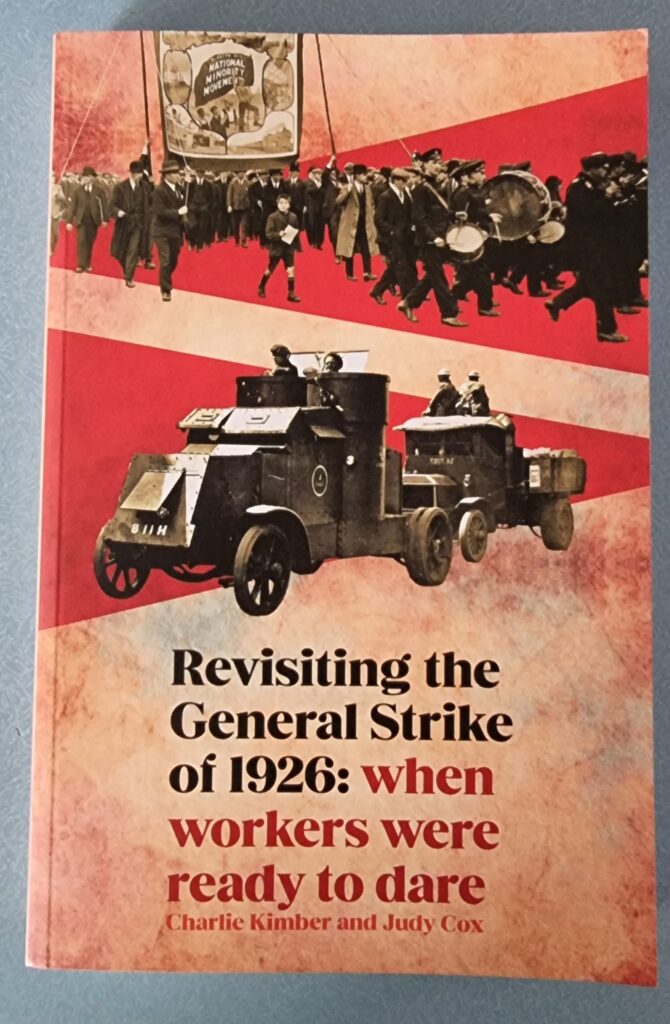
Charlie Kimber introduced the book which was written as a reminder of a time when workers and Trade Unions were prepared to take radical action, unlike our current times when the establishment has clamped down on workers power such that we are fast forgetting how it was back then. And in reminding us of this perhaps we can be inspired that workers solidarity is to be shrived for. We have been bashed, yes. But hopefully not beaten. We continue. We’re still here.
The 1926 General Strike might not have been the 1917 Russian October Revolution but it was certainly on its way to shutting down the country. It was successfully carrying out the “first wave” of the strike when after 9 days promises (false) were made that appeased the National Trades Council who then called a halt on the second wave.
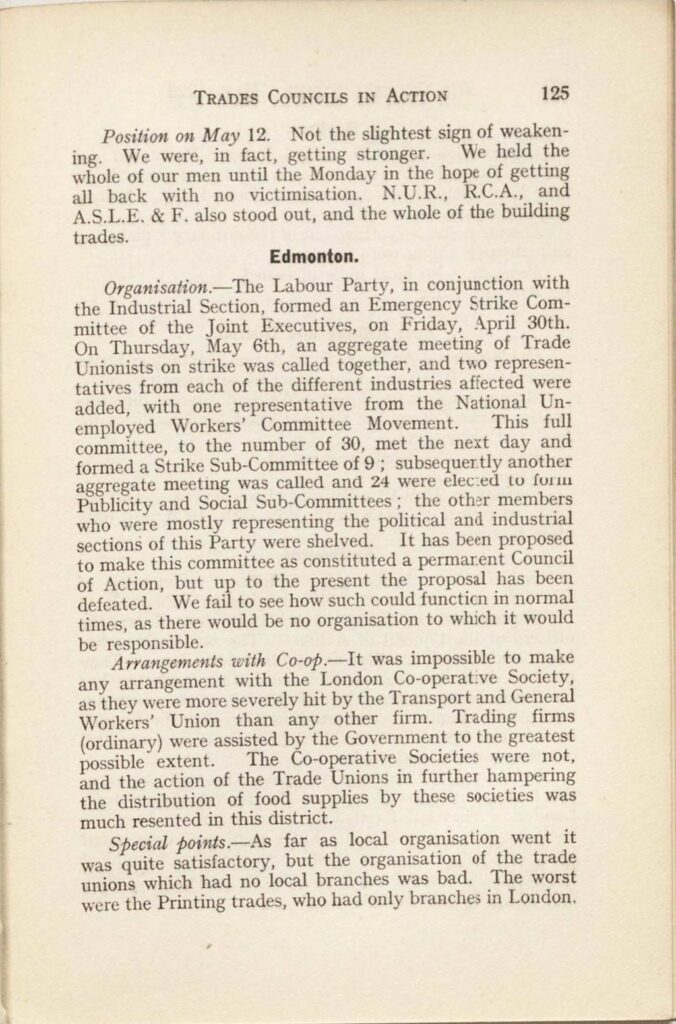
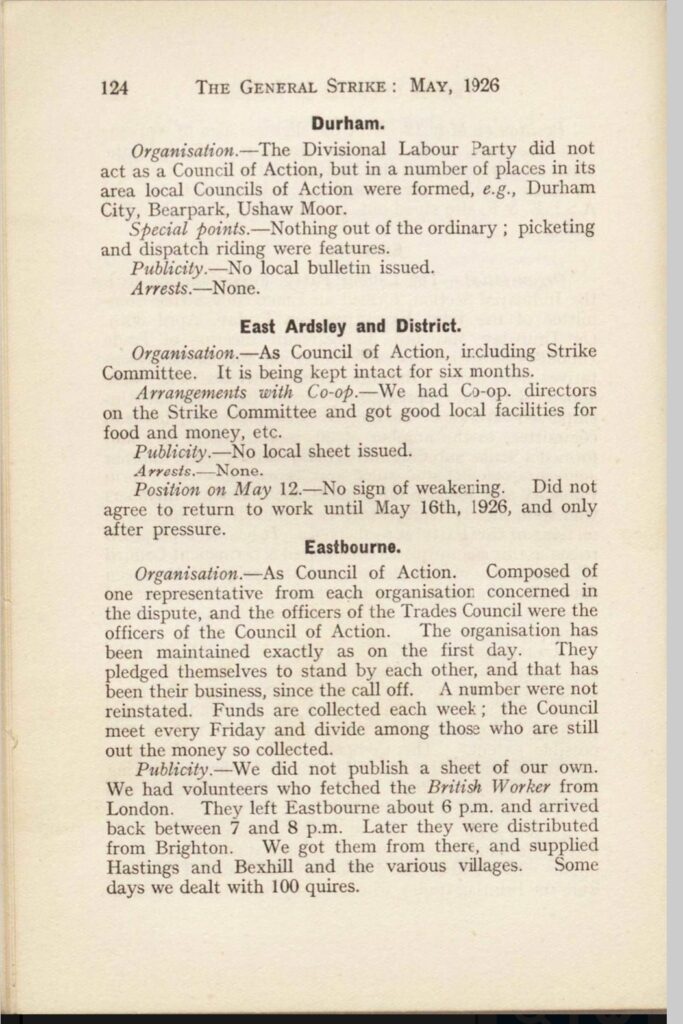
The Eastbourne “Council of Action” was not happy about this, as was recorded in a survey of trade councils by Emily Burns that took place after the strike. This survey can be found in The Warwick digital collection which brings together a range of reports on the general strike including the survey by Emily Burns, 1889-1972. Date Issued, 1926 Post-strike. Pages 126 and 127 – 124 and 125 of the original book.
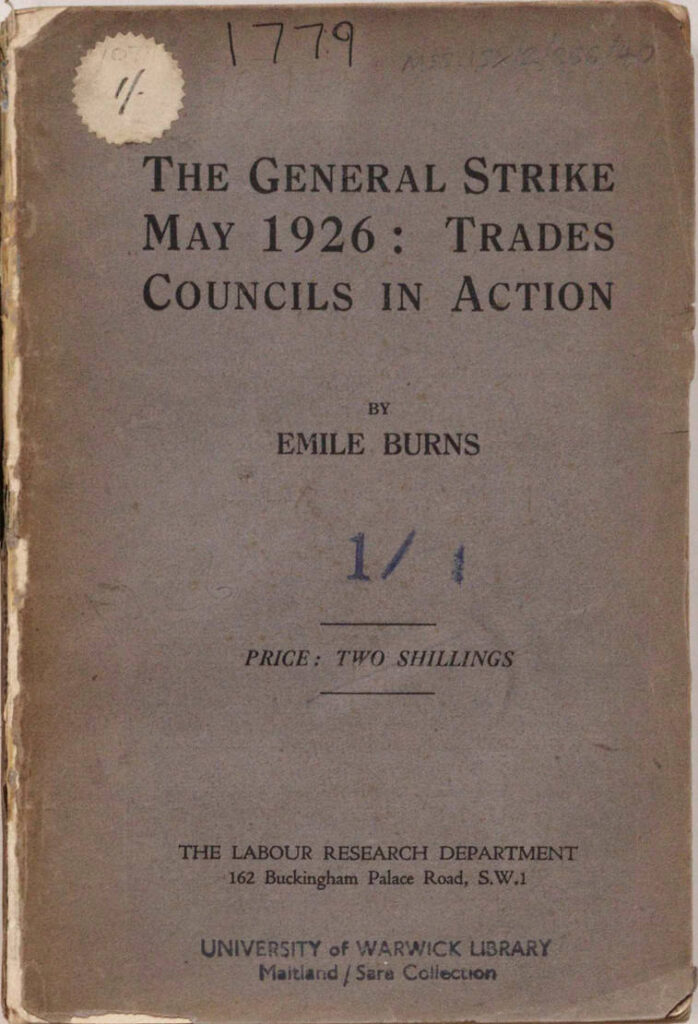
All local representatives were sent a questionnaire. Here’s the response from Eastbourne:-
“Eastbourne. Organisation. — As Council of Action. Composed of one representative from each organisation concerned in the dispute, and the officers of the Trades Council were the officers of the Council of Action. The organisation has been maintained exactly as on the first day. They pledged themselves to stand by each other, and that has been their business, since the call off. A number were not reinstated. Funds are collected each week; the Council meet every Friday and divide among those who are still out the money so collected. Publicity. — We did not publish a sheet of our own. We had volunteers who fetched the “British Worker” from London. They left Eastbourne about 6 p.m. and arrived back between 7 and 8 p.m. Later they were distributed from Brighton. We got them from there, and supplied Hastings and Bexhill and the various villages. Some days we dealt with 100 quires.
Position on May 12. Not the slightest sign of weakening. We were, in fact, getting stronger. We held the whole of our men until the Monday in the hope of getting all back with no victimisation. N.U.R., R.C.A., and A.S.L.E. & F. also stood out, and the whole of the building trades.
Remembering The Battle of Lewes Road: Brighton and the General Strike of 1926
The event turned out to be a double book launch. Dr Christian Hogsbjerg introduced a book first published in 1975 by Ernie Trory and Andy Durr. Christian had edited and introduced this book for Brighton and Hove TUC.
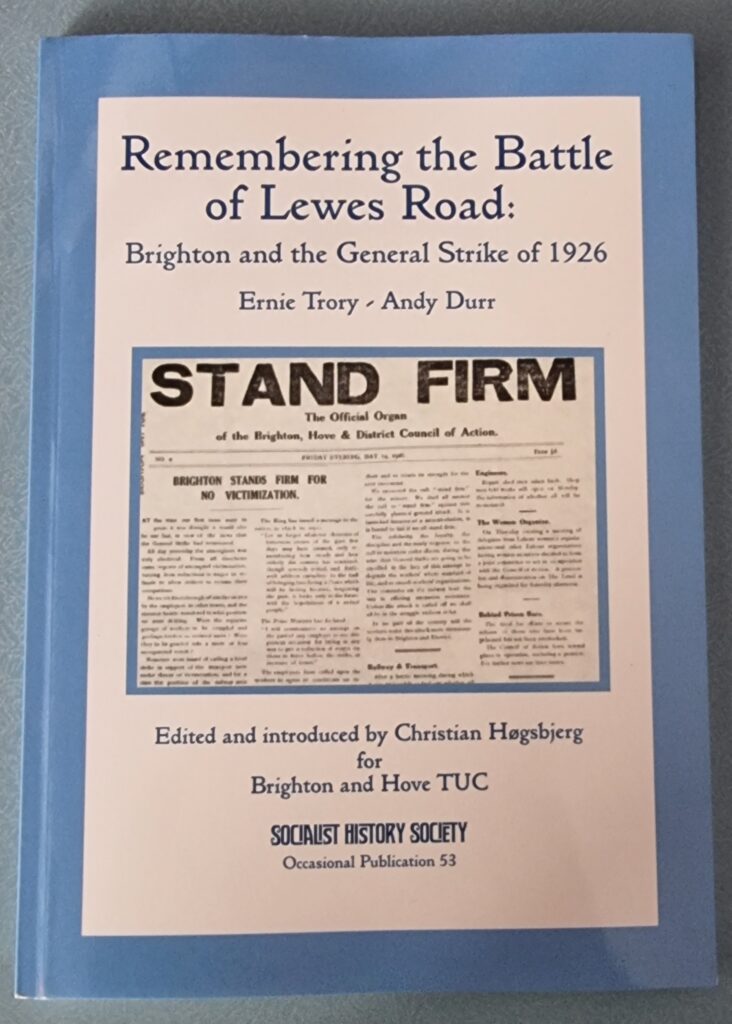
Christian set the context of the times. It was after the first world war when many had returned from serving for their country traumatised and disillusioned. Taking orders as serving soldiers, many had been commanded to advance into slaughtering diversionary battles deliberately set up with the intention to divert the enemy and protect the main flank. So. The inclinations for many workers in 1926 was not to trust in their “betters”.
So. The Battle of Lewes Road. Up to 4,000 strikers and supporters gathered at the Lewes Road tram depot (now the Brighton Electric bus garage) in Brighton to prevent strikebreakers from operating the transport system. The crowd faced off against hundreds of police and mounted special constables. More information here.
The book is available here.
Special thanks to Eastbourne Socialist Workers Party for hosting the Book Launch. And to Emma Mason Gallery.